
#033 Science Podcast Marketing: Three Case Studies from Behind the Mic

Table of Contents
At this point, who doesn't have a podcast?
And if you are here, reading this, it suggests that you are at least a tiny bit intrigued by the idea of starting your own.
At Zeeks, we have been creating podcasts for a little over two years now (our first episode launched in October 2023 to be exact). And we have learned a LOT since then.
Because science podcasts are no longer a “nice to have” marketing asset, but, when strategically used, become durable evergreen assets within a broader science marketing strategy. And drive trust, discoverability, and long-term authority.
However, success in science podcast marketing does not come from audio alone. It comes from integrating it successfully into a marketing funnel: social media, blogs, video snippets, search visibility, and narrative design.
In this post, we compare three science podcast case studies of work that we created to highlight that different podcast formats — independent, application-focused, and technology-driven — can deliver measurable value when aligned with a clear biotech podcast strategy.

Case Study 1: The Keep It Science Podcast
Independent science podcast with BBC recognition
• Podcast hub: https://www.zeeks-artforgeeks.com/podcast
• Listen on YouTube: https://www.youtube.com/@Zeeks-ArtForGeeks
1.1 Strategic context
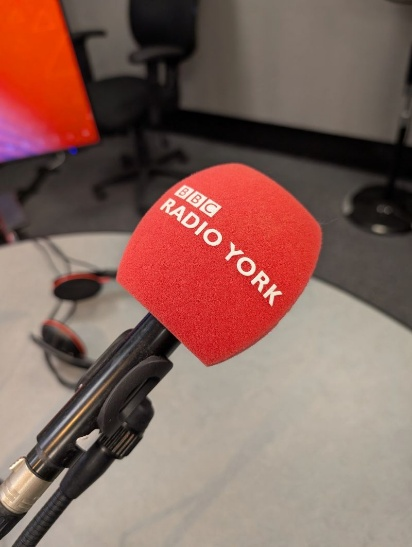
The Keep It Science Podcast is an independent science podcast as a collaboration between Dr Nick Gaunt (Acorn Scientific Marketing) and Dr Elisabeth Kugler (Zeeks – Art for Geeks Ltd). While season 1 covered a wide range of topics for the modern scientist, from stress management to resilience, season 2 focused on rare disease. Working with world-leading experts, we spoke about the rare disease research landscape, translational science, and clinician-patient insights.
This season was guided by the need to create visibility for rare disease, and bringing challenging topics to a wider patient-focused audience.
1.2 Marketing execution
From a science podcast marketing perspective, Keep It Science was designed with content multiplication in mind:
• Generating reach: By working with world-leading experts, charities, and companies, such as LifeArc, SRUK, and Imperial College London, we cast a wide net of guests. In addition to working with them to distribute content on their channels, we also shared content with patient groups.

• YouTube video snippets: This was the first season we trialled video for a podcast, and it was definitely a challenge. From using a new recording platform to sharing large amounts of content effectively, video was definitely a step up. But, this allowed us to extract high-impact moments to share as highly effective snippets.
• BBC Radio: Working to bring science to the public in an accessible format, Keep it Science was featured in multiple BBC interviews. On top of that, Keep it Science was selected as one of the top five BBC uploads in 2025.
1.3 Key takeaway
For independent science podcasts, authority emerges when editorial quality, ethical positioning, and multi-channel distribution are treated as inseparable. For us, working with video was a challenge that we gladly embraced. Working with world-leading scientists and institutions allowed wider impact, and we were able to significantly increase our audience reach.
Case Study 2: Conversations on the podcast AFM
Application-focused biotech podcast
• Podcast hub and blog archive:
• Listen on YouTube: https://youtu.be/mEtdjtABO5E?si=EkSb7beULvvgwYYn
2.1 Strategic context
Conversations on AFM focuses on Atomic Force Microscopy within life sciences and biomedical research. It addresses a highly specialised audience: researchers, core facility managers, and industry scientists working at the interface of biology, material sciences, and physics.
2.2 Marketing execution
This podcast exemplifies an application-focused biotech podcast strategy:
• Episodes are tightly scoped around real scientific workflows, challenges, applications, and future developments.
• Blog posts hosted on Bruker’s platform contextualise each episode, improving SEO for search queries as evergreen content. Thus, driving traffic directly to the Bruker webpage.
• Short-form audio snippets allow complex concepts to be surfaced on YouTube and Social Media to increase podcast awareness.
Importantly, Conversations on AFM positions the Bruker brand as a key opinion leader.
2.3 Key takeaway
In biotech podcasts, trust is built by placing scientific expertise front and centre. Blogs and YouTube snippets function as access points into deeper, expert-level conversations.
Case Study 3: The Light-Sheet Chronicles
Technology-led science storytelling
• Podcast hub and blog library:
• Listen on YouTube: https://www.youtube.com/watch?v=YxiIyMrgGRM
3.1 Strategic context
The Light-Sheet Chronicles explores various aspects of light-sheet microscopy through conversations with scientists, imaging specialists, and technology developers. The challenge of this podcast: translating cutting-edge imaging methods from subject-matter experts to generalist scientists (yes, it is in parts still very geeky!).
3.2 Marketing execution
From a science marketing agency perspective, this podcast succeeds because it treats complexity as an asset, not a barrier:
• Episodes are supported by educational blog content that expands on imaging principles, applications, and experimental design.
• YouTube snippets highlight conceptual breakthroughs rather than hardware specifications, broadening appeal while retaining technical depth.
• The podcast integrates seamlessly into a wider knowledge ecosystem, reinforcing Bruker’s role as a leading partner in imaging science.
3.3 Key takeaway
For advanced technology podcasts, success in science podcast marketing comes from curation and continuity, not simplification. Blogs and video snippets extend the educational lifespan of each episode and make the created content long-term assets.
Strategic Lessons for Science Podcast Marketing
Across all three case studies, several principles consistently emerge:
1. Podcasts must be embedded in a wider science marketing strategy, audio alone is insufficient.
2. Blogs drive SEO; YouTube snippets drive discovery; podcasts drive trust.
3. Ethical alignment and scientific accuracy outperform short-term promotional tactics.
4. A well-executed biotech podcast strategy builds authority that advertising cannot buy.
At Zeeks, we help science and biotech organisations design science podcasts that function as strategic assets, not just vanity projects. We will make sure to align science podcasts with your long-term strategy, discoverability, and impact.
If your organisation is considering podcasting as part of its science marketing strategy, the question is no longer whether to launch a podcast, but how to design it for sustained value.


Comments