
#029 The Customer Is the Hero in Science Marketing

Contents
Life science audiences are unique. They are highly trained, always busy, and motivated by evidence. And, let’s be honest, for many scientists, marketing and advertising don’t seem as exciting as chasing the latest R&D implementation or meeting a customer at a new demo.
And that’s fine!
Because, according to Allison Maslan's (SCALEit Method in “Scale or Fail”, 2018), business consists of four main pillars:
Streams: All the avenues to generate income, such as products, licences, or training.
Traffic: Traffic includes marketing and advertising to generate leads, which can then be turned from leads to sales by the sales department.
Sales: This unit turns leads into sales and hopefully returns loyal customers.
Operations: Includes everything “overhead”, such as finance, project management, insurance, etc.
And sure enough, many scientists are not naturally “excited” when faced with marketing. But marketing is incredibly powerful in creating touchpoints with your prospective customers. By designing and implementing a savvy marketing strategy, you can decide when and where your prospective customers learn about your company, business, and mission.
So, ideally, you know your customer well enough to know where and when they are most likely to see (think about creating an ideal customer profile, ICP, which includes that information).
You got your ICP, what now?
According to a 2023 Content Marketing Institute survey, 71% of B2B decision-makers say they are turned off by overly self-promotional content. At the same time, 65% say case studies and success stories are the most useful content type when evaluating solutions.
That tells us something vital: scientists don’t want to hear your product’s story. They want to see their own story reflected, their challenges, goals, and breakthroughs.
For example:

Product-centric: “Our sequencing platform delivers 99.9% accuracy.”
Customer-hero: “With 99.9% accuracy, researchers can trust their sequencing data to identify rare variants that could make or break a clinical trial.”
Both statements describe the same feature, but one positions the scientist as the central character.
Putting the Customer Centre Stage
At Zeeks, we have seen the impact of this approach across multiple projects:
The Conversations on AFM (Podcast). We created a podcast for Bruker Nano Surfaces where scientists using and developing atomic force microscopy (AFM) share their experiences. Each episode is crafted around the guest to understand their unique research challenges, discoveries, and visions for the future. The result? Listeners engaged not with a brand pitch, but with authentic, human stories of innovation. This creates brand awareness and helps Bruker to reinforce their thought leadership in AFM.
Case studies in biotech communications. When working with start-ups which are seeking investment, we often help to create a mindset shift in the team from “This is the technology we develop.” to “What problem is this solving, and how will life look different afterwards?”
This allows people to connect, see tangible human impact, and understand the innovation aspect, rather than just hearing the technical specs.
Workshops with research teams. Creating content for customers is well and good, but we need the whole team on board!
Using workshops and 1:1 meetings, we help guide teams to approach messaging that begins not with “what we built,” but with “what our customers needed.” This reframing consistently brings stronger engagement with partners, funders, and even the public.
Every time, the shift is the same: from “our technology is groundbreaking” to “look at what you can achieve with this technology.”
This means (a) we put the customer at the centre, and (b) that it tells a story about transformation, i.e. this technology creates impact with positive outcomes.
The Neuroscience of Storytelling
Why does this work so well? The answer lies in the brain.
When people hear data presented as facts alone, only the language-processing regions of the brain light up. But when information is wrapped in a story, neuroscience shows multiple systems engage simultaneously:
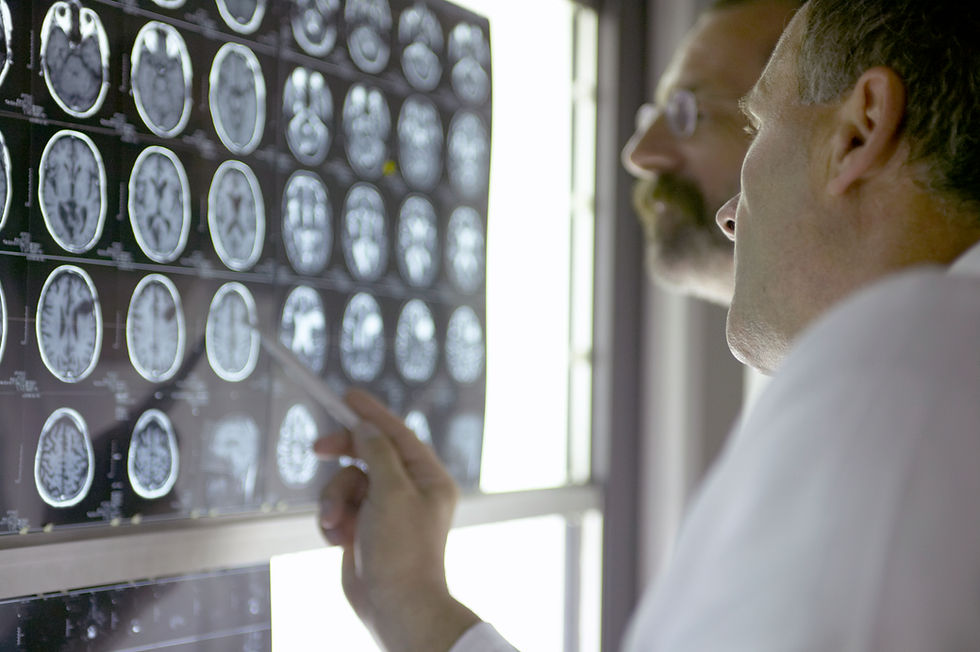
Mirror neurons fire, allowing the listener to empathise with the hero’s experience.
Oxytocin release increases trust and connection - Dr. Paul Zak’s research shows storytelling can boost oxytocin levels by up to 47%, directly increasing prosocial behaviour.
Emotional engagement activates the amygdala and hippocampus, improving memory retention. According to Stanford research, people are 22 times more likely to remember a story than a standalone fact.
In other words, making your customer the hero doesn’t just feel good, but literally changes how their brain receives and remembers your message!
Storytelling Frameworks That Work
To put this into practice, we often draw on the “hero’s journey.” The arc is simple, timeless, and adaptable:
The Challenge. Your customer faces a reproducibility crisis, regulatory hurdle, or data bottleneck.
The Guide. You provide expertise, tools, and support.
The Transformation. The customer overcomes the challenge and publishes faster, secures funding, or moves their therapy into trials.
This framework is especially powerful in biotech because it mirrors real scientific practice: struggle, guidance, progress (Read all about it in “Don’t be such a scientist”).
Practical Steps for Customer-Centred Science Marketing
Want to make your customer the hero?
Here are steps you can take:
Start with their pain points. Use interviews and discovery sessions to surface the challenges that matter most to them.
Translate features into outcomes. For every product feature, ask: “So what? What does this enable for the customer?”
Show, don’t tell. Use case studies, testimonials, or even podcasts to let the hero speak in their own words.
Balance emotion and evidence. Pair storytelling with numbers. For example, explain that a new imaging workflow cut analysis time by 60%, freeing up researchers to focus on experimental design.
Keep it human. Even in technical contexts, clarity and empathy are more persuasive than jargon.
Zeeks’ Perspective
At Zeeks, we have witnessed how this approach transforms impact. Companies that position themselves as guides rather than heroes consistently see deeper engagement.
And here’s the deeper truth: your innovation only matters if others can see themselves using it. The best way to achieve that is to invite your customer into the narrative, not as a spectator, but as the central character.
Conclusion
In life science and biotech marketing, your role is not to star in the story. It’s to guide the hero - the researcher, clinician, or innovator - through their journey.
Neuroscience tells us this approach is not only more memorable but more persuasive. Numbers show it drives trust and engagement. And practical experience, from projects such as the “Conversations on AFM” podcast, proves it works.
At Zeeks, we believe every innovation deserves a story that resonates.
But the most powerful stories are not about companies.
They’re about people.


Comments